When sourcing custom webbing, straps, or sewn assemblies, most buyers focus on two things first: material and price. But behind every quote is a complex value chain that determines not only cost, but also lead time, consistency, and long-term reliability.
Understanding how design decisions, tooling, and outsourced services affect production helps engineers, product managers, and procurement teams avoid delays, cost overruns, and quality issues – especially in regulated or high-performance industries.
This guide breaks down how the custom webbing value chain works and what buyers can do to optimize both performance and efficiency.
Why the Custom Webbing Value Chain Matters
Custom narrow textiles are not “off-the-shelf” components. Every specification – from yarn type to stitch pattern – creates downstream effects in manufacturing.
Small design changes can impact:
- Tooling requirements
- Production speed
- Minimum order quantities
- Quality control processes
- Supply chain stability
- Lead times
When these factors aren’t considered early, projects often experience:
- Unexpected price increases
- Extended delivery schedules
- Engineering change orders
- Inconsistent product quality
A strong understanding of the value chain allows buyers to make informed decisions before committing to production.
Step 1: Design Choices That Shape Cost and Timeline
Every custom webbing project begins with design. This stage has the greatest influence on overall production efficiency.
Material Selection
Fiber and yarn choices affect sourcing, processing, and testing.
Common options include:
- Nylon (high strength and elasticity)
- Polyester (UV and moisture resistance)
- Aramid fibers (heat and flame resistance)
- Specialty blends (performance customization)
Each material has different availability, pricing, and processing requirements. Exotic or specialty fibers may increase both cost and lead time due to limited suppliers.
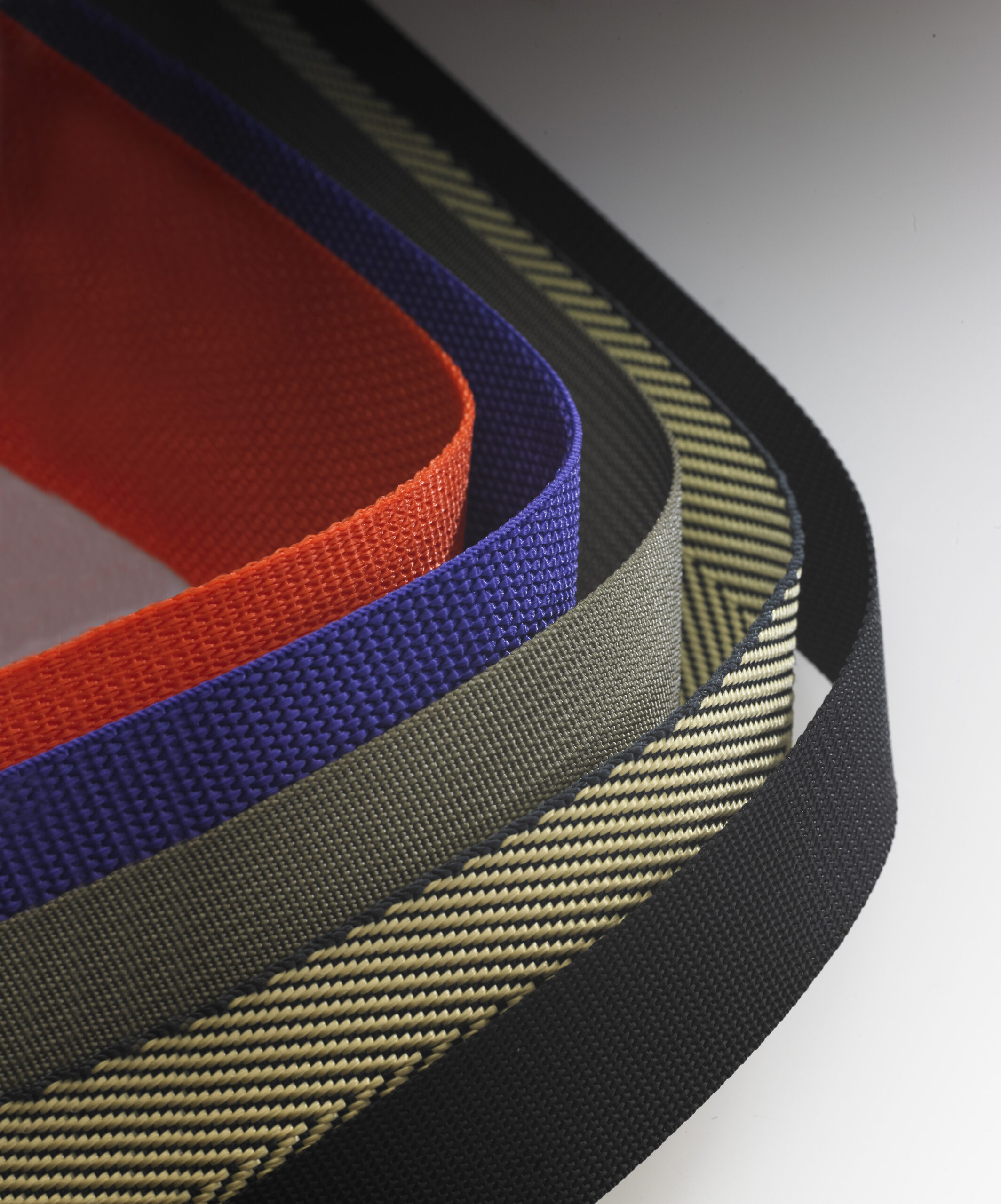
Width, Thickness, and Weave Pattern
Custom widths or nonstandard thicknesses often require:
- Specialized looms
- Custom reed configurations
- Modified tension settings
Complex weaves improve performance but typically reduce production speed. Simpler constructions allow for faster throughput and lower costs.
Color, Dye, and Finish Requirements
Custom colors, camouflage patterns, coatings, or chemical treatments introduce additional production steps, including:
- Dye lot scheduling
- Batch testing
- Cure or drying time
- Compliance verification
These steps increase both production time and administrative overhead.
Step 2: Tooling and Setup Requirements
Tooling is one of the most overlooked cost drivers in custom webbing projects.
Loom and Weaving Tooling
Nonstandard designs may require:
- Custom reeds
- Modified heddles
- Specialized guides
- Tension control systems
These tools require engineering time and testing before full production can begin.
Sewing and Assembly Fixtures
For finished straps and assemblies, additional tooling may include:
- Sewing jigs
- Alignment fixtures
- Automated guides
- Cutting templates
Well-designed fixtures improve consistency and reduce labor costs, but they require upfront investment.
Tooling Amortization
Many manufacturers spread tooling costs over production volume. Low-volume projects often carry higher per-unit costs because tooling expenses are distributed across fewer units.
Early volume planning can significantly reduce long-term costs.
Step 3: Production Planning and Scheduling
Once design and tooling are finalized, production efficiency becomes the primary driver of lead time.
Batch Size and Run Length
Short production runs often result in:
- More frequent machine changeovers
- Increased setup time
- Lower overall efficiency
Longer runs allow manufacturers to optimize machine utilization and labor allocation.
Machine Availability
Specialty webbing machines may have limited availability. If a design requires rare equipment, production schedules can be affected by existing commitments.
Quality Assurance Processes
Industries such as defense, aerospace, and safety equipment require rigorous testing, including:
- Tensile strength verification
- Abrasion testing
- Environmental exposure testing
- Lot traceability
These steps add time but are essential for compliance and performance.
Step 4: Outsourced and Value-Added Services
Many custom webbing projects involve services beyond weaving.
Industrial Sewing and Assembly
Outsourcing sewing introduces additional coordination and logistics. In-house sewing capabilities typically reduce:
- Transportation delays
- Communication errors
- Quality variability
Integrated manufacturing shortens production cycles and improves accountability.
Cutting, Labeling, and Packaging
Final preparation often includes:
- Precision cutting
- Barcoding
- Label attachment
- Custom packaging
These value-added services impact labor cost and fulfillment speed.
Inventory Banking and Stock Programs
Some manufacturers offer inventory banking services, producing and storing inventory in advance to support just-in-time delivery.
This approach reduces customer lead time but requires accurate demand forecasting.
Step 5: Domestic vs. Offshore Manufacturing Considerations
Sourcing decisions strongly influence both cost and risk.
Offshore Manufacturing
Potential advantages:
- Lower labor rates
- High volume capacity
Potential challenges:
- Extended shipping times
- Customs delays
- Communication barriers
- Compliance risks
- Limited flexibility
Domestic Manufacturing
Potential advantages:
- Shorter lead times
- Faster engineering changes
- Improved quality control
- Regulatory compliance (e.g., Berry Amendment, Buy America)
While unit costs may be higher, domestic production often reduces total cost of ownership through reliability and responsiveness.
How Early Collaboration Reduces Cost and Lead Time
One of the most effective ways to optimize the value chain is early collaboration with the manufacturer.
When suppliers are involved during design, they can help:
- Recommend alternative materials
- Simplify weave structures
- Reduce tooling complexity
- Optimize stitch patterns
- Improve manufacturability
These adjustments often preserve performance while lowering production risk.
Practical Tips for Buyers and Engineers
To improve outcomes on custom webbing projects, consider the following:
1. Share Complete Specifications Early
Provide clear details on materials, dimensions, tolerances, testing requirements, and volumes.
2. Discuss Volume Projections
Even rough forecasts help manufacturers plan tooling and inventory strategies.
3. Ask About Tooling Implications
Understand which features require custom tooling and how they affect pricing.
4. Evaluate Integrated Manufacturing Capabilities
Suppliers that offer weaving, sewing, and finishing in-house typically deliver faster and more consistent results.
5. Plan for Testing and Certification
Build time for qualification and validation into project schedules.
Turning Custom Webbing Into a Predictable Supply Chain
Custom webbing is more than a material purchase. It is a manufacturing system that includes design, tooling, production, assembly, and logistics.
When buyers understand how each stage affects cost and lead time, they can make smarter decisions that improve performance, reduce risk, and support long-term supply stability.
Working with an experienced manufacturer that manages the entire value chain helps transform custom components into reliable, repeatable solutions — even in demanding environments.