In rescue, fire, and military environments, a strap is more than a length of material. It is literally a life-safety component. When lives or mission-critical loads depend on performance, engineering decisions should not be driven by single-test numbers or off-the-shelf options. Every detail, from webbing strength to buckle compatibility, influences the reliability of the final assembly.
At American Cord & Webbing (ACW) we have been manufacturing and selling webbing, cords, buckles, and accessories for more than a century. That experience gets help to OEMs and engineers who apply real-world design principles to safety straps for the most demanding conditions.
Beyond Tensile Strength
Strength alone doesn’t equal safety. Many designs rely on a strap’s advertised break strength, assuming a higher value automatically improves performance. In rescue systems, that assumption creates risk. There is more to evaluate.
- Working Load Limit (WLL): This represents the safe operating load, which is a fraction of the material’s ultimate tensile strength.
- Safety Factors: Typically range from 3:1 in industrial applications on up to 10:1 for critical life-safety harnesses, accounting for wear, variability, and unknown loading angles.
- Static vs. Dynamic Loads: Tensile testing occurs under controlled static conditions, but real-world rescue loads are dynamic with sudden shocks, shifting weight, or repeated cycles. These transient forces will momentarily exceed the WLL, amplifying the importance of material stretch and recovery.
Effective rescue strap design isn’t about maximum strength alone. It is about controlled performance under unpredictable stress.
Material Selection: Balancing Strength, Stretch, and Safety
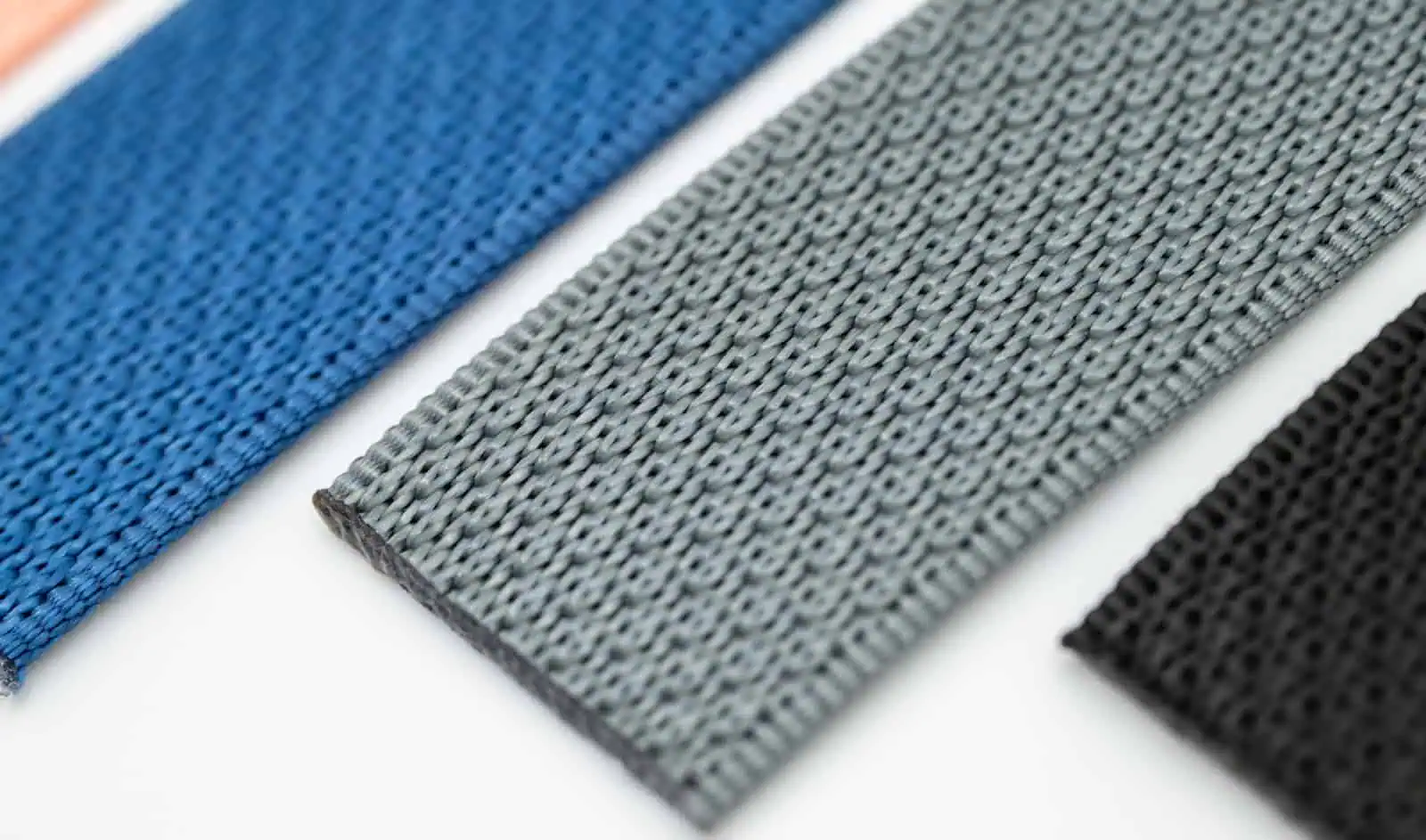
Every fiber construction has unique mechanical behavior when under load, which dictates its suitability for rescue and safety systems.
- Nylon webbing: High strength and natural elasticity make it excellent for absorbing shock loads; however, it loses strength when wet and stretched under sustained tension.
- Polyester webbing: Lower stretch and superior UV and moisture resistance make it ideal for consistent dimension control in marine or outdoor rescue gear.
- Specialty fibers: Aramid or flame-resistant blends, for example, Nomex® and Kevlar®, maintain structural integrity in fire, aviation, and military settings when high heat or abrasion are expected.
Designers should consider elongation control, or how much the webbing stretches under load. In some scenarios, energy absorption during stretching is beneficial. In others like structural harnesses or anchoring systems, too much elongation leads to instability or unintended movement.
For a deeper look at high-heat or chemical-resistant materials, review ACW’s Flame-Resistant Webbing page.
Hardware Integration: The Critical Interface
Even the strongest military webbing or safety strap could fail if paired with incompatible hardware. Webbing and buckles have to functionally perform with webbing as one system, not as separate components.
- Interface geometry matters. The thickness, weave stiffness, and edge contour of webbing affects how it interacts with buckles, adjusters, or cam locks.
- Improper pairing might lead to slippage, premature wear, or point loading that exceeds localized tensile strength.
- Integrated design where both webbing and hardware are engineered together will eliminate risks from mismatch.
As the only webbing manufacturer and buckle manufacturer, ACW offers OEMs an integrated approach. Our engineers coordinate fiber construction, weave patterns, and hardware choice under one roof to align system performance with application demands.
Explore ACW’s Hardware and Buckle Solutions to learn more about available plastic and composite designs engineered for safety performance.
Environmental and Operational Demands
Field conditions rarely if ever match what happens in the lab. In rescue and safety operations, materials face heat, moisture, and abrasion; all of which affect performance over time.
- Fire and Rescue: Webbing may face flash heat, fuel, and debris abrasion. Flame-resistant and high-tenacity fibers maintain structural integrity when others in these situations would fail.
- Marine and Flotation: Constant moisture, salt spray, and UV exposure degrade fibers and coatings. Specific materials like polyester and polypropylene combined with specialized finishes enhance longevity in maritime straps.
- Military and Industrial: Exposure to oils, chemicals, and contact with abrasive surfaces require coatings and weaves designed for resistance and long service life.
Material selection should factor in long-term durability, not just initial load rating. ACW’s in-house testing includes accelerated weathering, flame exposure, and cyclic fatigue to validate real-world resilience.
Compliance and Risk Management
In life-safety applications, consistency is as critical as strength. Maintaining traceability and process control throughout manufacturing is essential for compliance with industry and defense standards.
- Consistent manufacturing and testing ensure repeatable mechanical performance across batches.
- Traceability allows every lot of webbing or hardware to be tracked through production and quality assurance records.
- Domestic manufacturing minimizes variability and supply chain risk, key considerations for OEMs operating under strict quality systems like ISO 9001, NFPA, or MIL-SPEC requirements.
By sourcing domestically with an established partner like ACW, engineers reduce variability that leads to noncompliance or performance drift across product lifecycles.
ACW’s Integrated Capabilities for Safety and Rescue Systems
Located in Rhode Island, American Cord & Webbing is one of the only U.S. suppliers that manufactures both webbing and plastic hardware in-house. This integration supports faster design cycles, tighter quality controls, and guarantees material compatibility. These advantages matter when performance cannot fail.
ACW’s capabilities for OEMs include:
- Custom-engineered rescue strap design, developed to meet specific load, elongation, and environmental conditions.
- Complete manufacturing and testing for webbing, buckles, and assemblies.
- In-house material science expertise for MIL-SPEC webbings, aramid constructions, and high-tenacity synthetics.
- Rapid sampling and prototyping to validate new strap concepts before full production.
For complex safety systems, whether an NFPA-rated harnesses, flotation devices, or restraint assemblies, ACW’s integrated engineering process ensures that every strap performs predictably and safely under extreme conditions.
Design with Confidence. Manufacture with ACW
Rescue strap design demands reliability, repeatability, and engineering precision that accounts for environmental, mechanical, and human factors. Choosing the right webbing manufacturer and buckle manufacturer makes the difference between safety and risk.
Contact ACW’s engineering team to review your safety or rescue application. Our experts will help evaluate your current strap design for load consistency, environmental resilience, and compliance alignment so you can deliver with confidence.
Explore our Military Webbing, Flame-Resistant Webbing, and Custom Webbing pages for material options, or visit our Buckles and Hardware section to learn more about integrated fastening solutions for life-safety applications.