At its core, webbing strength rating is a quantified tensile value, typically reported as a minimum breaking strength, that marks at which tested load under controlled conditions a construction of webbing fails. In tensile testing, a calibrated machine pulls the webbing to failure while recording force and elongation to yield the ultimate limit or “breaking” strength for specification and compliance.
In standards-based environments, such as MIL-W-4088 (now PIA-W-4088) or NFPA 1983 life-safety criteria, these tensile ratings sit alongside requirements for elongation, abrasion resistance, heat exposure, and other performance characteristics. Strength cannot be evaluated in isolation. For assemblies (straps with hardware, stitching, etc.), the effective strength rating is capped by the weakest component or joint, not just the raw webbing roll itself.
Breaking strength vs working load limit
Breaking strength is the maximum load the webbing or assembly sustains before catastrophic failure under laboratory test conditions. Working load limit (WLL) is the maximum load that should ever be applied to a product while in service, typically defined by dividing the breaking strength by a safety factor (commonly 3:1 for tie-downs and many load-bearing systems).
For example, if a webbing strap is tested to a 9,000 lb breaking strength, a 3:1 design factor yields a 3,000 lb WLL for the complete assembly, assuming hardware and stitching are equal to or stronger than the webbing. Life-safety and rescue systems might even use more conservative factors or additional criteria such as maximum elongation at a percentage of minimum breaking strength, as seen in NFPA 1983 requirements.
How higher strength ratings change performance
Increasing the webbing strength rating typically involves changes in yarn material, yarn denier, construction, weave density, and most importantly amount of yarn. These changes alter performance characteristics beyond peak tensile values. Higher-strength webbing often uses heavier yarns leading to increased thickness and width. Another huge factor is tension control when weaving. Misaligned fibers in weaving lead to reduced tensile strength of webbing.
Strength rating also interacts with elongation and fatigue behaviors. In many load-bearing systems, controlled stretch is desirable for managing energy and reducing shock loads. In other applications, low elongation preserves dimensional stability and load positioning. Very stiff, ultra-high-strength webbing exhibits lower cyclic fatigue tolerance in bending or over small-radius hardware if not designed appropriately, which will shorten service life, even though the rated tensile is high.
Webbing elongation, tensile strength, and fatigue
Elongation under load is a critical part of webbing performance, especially in safety, aerospace, and rescue systems. Standards such as NFPA 1983 specify minimum and maximum elongation. For example, between 1% and 10% at 10% of minimum breaking strength to balance energy absorption with positional stability.
From an engineering standpoint, webbing that elongates under load might introduce slack and increase fall distance. On the other hand, webbing with very low elongation will better transmit high peak forces to anchors, fasteners, and the human body. Tensile strength and elongation curves, not just single-point ratings, are therefore important for evaluating shock performance, cyclic loading, and compatibility with adjacent components in the load path.
There are trade-offs as to why “stronger” is not always better
Choosing a webbing solely because it has the highest published strength rating creates problems in real-world applications. As previously noted, stronger, thicker constructions increase stiffness, reduce conformability, and generate higher stress concentrations over small hardware radii or sharp edges; so abrasion and flex-fatigue are accelerated.
Over-specifying strength adds unnecessary weight, cost, and bulk, important criteria in aerospace, medical, or soldier-carried systems where every gram of weight matters. In many designs, an optimized strength rating that meets WLL and safety factors, combined with the right elongation, abrasion resistance, and environmental durability, yields better-performing assemblies than simply selecting the strongest available webbing.
Material choice: nylon, polyester, polypropylene, or Aramid
Material selection is a primary consideration for achieving webbing strength ratings and overall performance characteristics.
- Nylon webbing
Nylon offers high tensile strength and good durability, making it suitable for dynamic loads and applications that benefit from some level of stretch. However, nylon is hygroscopic, absorbing moisture. That increases elongation and reduces tensile strength. Additionally, nylon is less stable when exposed to UV than polyester. Explore ACW’s nylon webbing capabilities. - Polyester webbing
Polyester provides excellent strength and has lower elongation than nylon at comparable loads. It tends to be more suitable for maintaining load position, and it performs better when minimal stretch is required. It also offers superior UV resistance and reduced strength loss when in wet conditions. This makes it more ideal than nylon for some outdoor, marine, and industrial uses. See ACW’s polyesterwebbingsolutions. - Polypropylene webbing
Polypropylene is lighter and more economical. It has good water resistance, but lower strength and temperature capability than nylon or polyester. This dissuades its use in certain demanding military and industrial webbing performance applications. It is best suited for light to medium-duty or cost-sensitive applications where peak load is modest. - Aramid and high-modulus fibers
Aramid fibers (e.g., Kevlar) and other high-modulus materials deliver extremely high strength with very low stretch and high heat resistance. One drawback is that they may be more sensitive to flex-fatigue, bending over small radii, and UV exposure when not properly protected. These webbings are often used in niche aerospace, parachute, high-temperature, or ballistic systems where specialized design considerations outweigh cost and handling constraints.
As these materials are evaluated, the same nominal “webbing strength rating” might imply very different elongation profiles, abrasion resistance, and environmental durability. Data about materials must be evaluated in the context of target and use applications. Talk to the people with answers; the highly experienced ACW representatives at contact ACW.
Military and industrial webbing performance
Military and high-end industrial webbings, such as those produced to MIL-W-4088, are engineered to combine tensile strength with tightly controlled abrasion resistance, flexibility parameters, and environmental performance. Typical MIL-W-4088 nylon webbing types span roughly 2,500 to 15,000 lbs in tensile strength, with widths usually between 1 inch and 3 inches depending on type and use.
Specifications address color fastness, weave structure, and sometimes resin impregnation to improve abrasion and wear resistance. Applications include parachute harnesses, pilot restraint systems, tactical gear, aircraft seating, and cargo and rescue systems.
For more information on ACW’s role in military and industrial markets, visit the military webbing applications and industrial webbing applications pages.
Common mistakes in selecting webbing
Several issues appear to recur when teams select webbing and focus on the highest published strength rating:
- The assembly’s weakest link gets ignored
Engineers may specify high-strength webbing and then pair it with hardware, stitching, or adjusters that have lower ratings. This error drives the assembly’s WLL down to the weakest component. - Elongation and dynamic behavior are overlooked
Specifying low-elongation webbing where energy absorption is needed will increase peak loads on anchors and users, while high-elongation materials in precision positioning systems will introduce drift or loss of tension. - Environmental factors get underestimated
Choosing nylon for continuously wet or UV-intense environments, for example, leads to increased stretch, strength loss, reduced service life, and bad optics to consumers compared with polyester. - Abrasion and flex-fatigue consideration
Routing very stiff, high-strength webbings over small-radius hardware or through tight channels shortens fatigue life and even the static strength rating when stressed above the expected load.
Work with a manufacturing partner that understands both ratings and real-world failure modes to avoid these pitfalls and to align material choices with system-level performance requirements.
Some real-world application examples
In life-safety and rescue: When applications are governed by standards such as NFPA 1983, design teams must consider minimum breaking strength, controlled elongation, heat resistance, and compatibility with hardware and stitching patterns to make sure performance is predictable under shock loading. Webbing used for escape, descent, or harness systems must meet tensile criteria but also maintain integrity under thermal and cyclic stress.
For military and aerospace: In systems using MIL-W-4088 nylon webbing, tensile strength is balanced with weight, flexibility, and long-term abrasion resistance for parachute harnesses, ejection seat restraints, cargo nets, and troop gear.
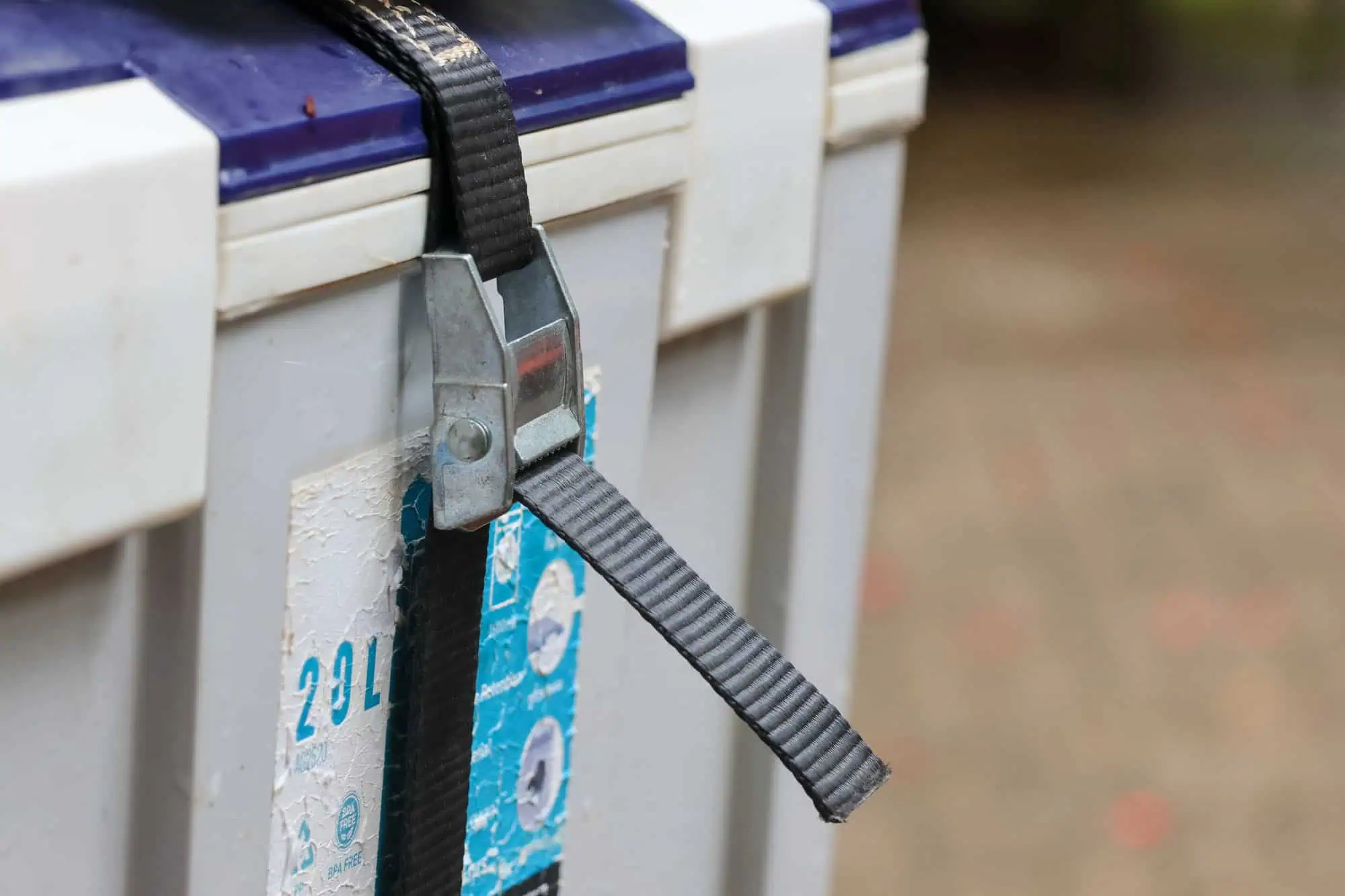
In industrial load-bearing: Cargo load and control applications where understanding breaking strength vs working load limit is essential for specifying tie-downs, ratchet straps, and slings that maintain adequate safety margins.
To see ACW’s broader portfolio, visit the webbing and cord page or review ACW’s custom services for engineered solutions.
ACW is your engineering partner
Strength ratings, elongation behavior, abrasion resistance, and environmental durability all interact to define how a webbing will perform over the course of its service life. Partner with a manufacturer that tailors materials, weaves, coatings, and assembly designs to meet the needs of OEMs, engineers, and procurement teams. When nothing less than specified webbing that meets true performance requirements, reach out to ACW.
ACW collaborates with design and engineering teams across military, industrial, aerospace, medical, and safety sectors to match webbing strength ratings with application-specific demands, standards, and safety factors. To discuss your project, review data, or engineer a custom solution, connect with ACW’s team through ACW.